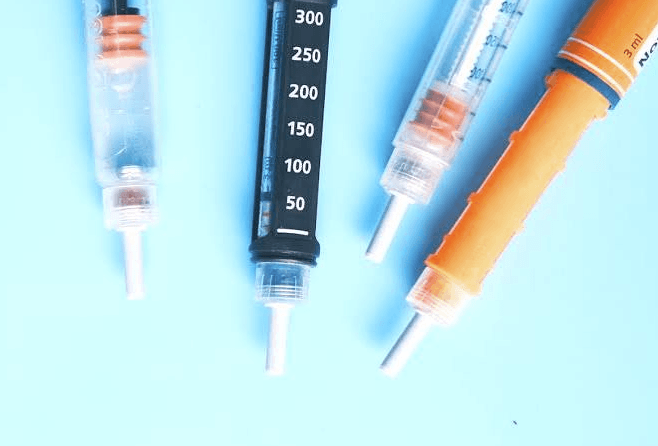
Alongside syringe capacity, understanding insulin needle sizes, specifically gauge and length, plays an important role in supporting comfortable, effective insulin administration. This guide covers the key considerations relevant to needle selection for insulin injection.
Understanding Needle Gauge
Needle gauge refers to the diameter of the needle, with higher gauge numbers indicating thinner needles, and most insulin needles fall within a relatively fine gauge range specifically chosen to minimize discomfort during the frequent injections many insulin-dependent patients require.
Understanding Needle Length Options
Insulin needles are available in various lengths, and appropriate length selection depends partly on individual patient factors, including body composition, since needle length affects how reliably the injection reaches the appropriate subcutaneous tissue layer for effective insulin absorption.
Why Shorter, Finer Needles Have Become More Common
As insulin needle technology has advanced, shorter and finer needle options have become increasingly available and commonly recommended, reflecting research supporting effective subcutaneous delivery with reduced patient discomfort compared to older, longer needle standards.
Individual Factors Affecting Appropriate Selection
Patient-specific factors, including body composition and injection site, can influence which specific needle length a healthcare provider recommends, making individualized guidance more appropriate than assuming a single standard length suits every patient.
Needle Sharpness and Single-Use Practice
Since needle sharpness can affect injection comfort, and needles can become duller with reuse even when used by the same patient, following single-use practice recommendations helps maintain consistent comfort and effectiveness across repeated injections.
Consulting Healthcare Providers for Personalized Guidance
Given the individual factors involved in appropriate needle selection, patients should work with their healthcare provider or diabetes educator to determine which specific gauge and length best suits their individual injection technique and body composition.
Reviewing Available Needle Size Options
For a more detailed breakdown of available gauge and length options and their appropriate applications, reviewing information on insulin needle sizes helps support informed discussion with healthcare providers about personalized selection.
See also: How to Protect Your Personal Data Online
Frequently Asked Questions
What does needle gauge refer to in the context of insulin needles? Needle gauge refers to needle diameter, with higher gauge numbers indicating thinner needles, and most insulin needles use a relatively fine gauge chosen to minimize discomfort during frequent injections.
Why have shorter, finer insulin needles become more commonly recommended? Advances in needle technology and supporting research have shown effective subcutaneous insulin delivery with reduced patient discomfort compared to older, longer needle standards.
Who should determine the appropriate needle length for an individual patient? Patients should work with their healthcare provider or diabetes educator, since individual factors including body composition can influence which specific needle length is most appropriate.
Final Thoughts
Understanding the considerations behind insulin needle gauge and length selection helps patients engage more informed discussions with their healthcare providers about personalizing this aspect of their diabetes management. Appropriate needle selection supports both injection comfort and effective medication delivery.