Customer expectations around delivery have shifted considerably over the past decade. People no longer accept vague timelines or radio silence once an order leaves a warehouse. Businesses that fail to provide clear, consistent updates risk losing repeat customers to competitors who do. The connection between logistics transparency and long-term customer loyalty is stronger than many operations teams realise.
The adoption of real time shipment tracking has become a meaningful differentiator for businesses across freight forwarding, retail, and manufacturing. When customers can follow a consignment from dispatch to delivery, the anxiety around waiting dissolves. Updates at each stage of transit reduce the volume of inbound enquiries, free up customer service teams, and create a smoother overall experience that people remember and are far more likely to return to.
When Transparency Becomes a Competitive Asset
Visibility Builds Lasting Confidence: Customers who know exactly where their goods are at any given moment feel a greater sense of control over the process. That control, perhaps more than delivery speed itself, is what drives customer satisfaction. Businesses investing in live tracking are not simply offering a convenience. They are building a relationship grounded in honesty, and that matters considerably in competitive logistics markets.
The Real Cost of Silent Updates: When tracking data is absent or unreliable, customers tend to assume the worst. A delayed update becomes assumed bad news, and once that anxiety sets in, trust erodes. Research consistently shows that proactive communication about delays is received more positively than silence. Businesses that get ahead of problems with timely updates tend to retain customers even when something goes wrong.
Location Triggers and Automated Alerts: One practical tool supporting live updates is geofencing, which allows businesses to set virtual boundaries around specific geographic points. When a shipment crosses one of these boundaries, an automated notification fires. This removes the manual effort of chasing status updates and ensures customers receive relevant information at the right stage of the journey, without needing to contact anyone.
See also: Crypto Adoption by Global Businesses
Moving From Static Data to Live Visibility
Why Legacy Tracking Falls Short: Most traditional tracking systems display only the most recent scan point, with no updates in between. A customer might see “departed warehouse” and then nothing for several days. Active, continuous tracking fills those gaps with live location data, producing a far more accurate and reassuring picture. Businesses that shift to active systems typically report measurable reductions in customer service enquiries.
What Freight Forwarders Experience Differently: For freight forwarders managing complex multimodal routes, the ability to track cargo across sea, road, rail, and air without losing visibility between modes is operationally significant. Their clients expect consistent updates regardless of which carrier handles a particular leg. Forwarders that offer that level of transparency have a clear advantage during contract renewals and when competing for new business.
Businesses operating across multiple transport modes gain specific, measurable advantages when tracking systems are designed to cover the full journey:
- Multimodal updates keep customers informed across every carrier handover, reducing uncertainty during long-haul shipments.
- Automated alerts at key milestones remove the need for manual status checks, allowing teams to focus on exceptions rather than routine enquiries.
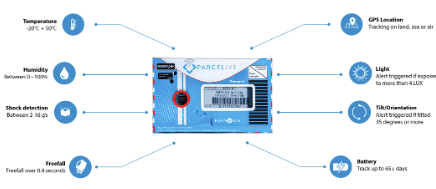
- Condition monitoring data reassures buyers of fragile or temperature-sensitive goods that cargo has arrived in the expected state.
- Faster exception management means issues are identified earlier, and customers are notified before they think to ask.
Data Accuracy and What It Signals to Customers
When Wrong Information Damages More Than Delays: Inaccurate tracking updates are arguably worse than no updates at all. If a system shows a consignment as delivered when it has not arrived, or lists the wrong location mid-transit, customers lose confidence almost immediately. That kind of error is difficult to recover from, particularly when a customer has already escalated the issue internally before realising the data was wrong.
Accuracy as a Reflection of Operational Standards: The quality of tracking data reflects the quality of the business behind it. Customers may not always articulate this in those terms, but they notice when updates are consistently accurate and timely. Over time, that accuracy becomes associated with the brand itself, signalling care, discipline, and a level of investment in the delivery process that cheaper alternatives rarely replicate.
Retention Is Built on Fewer Surprises
Reliable Tracking Drives Repeat Business: Customers who experience consistent, accurate updates are far more likely to place follow-on orders without hesitation. There is less friction in the decision because they already trust the process. Businesses that treat last-mile visibility as an afterthought often find themselves investing in customer recovery rather than customer growth. That gap between reactive and proactive operations is where long-term relationships are often lost.
Beyond the Delivery Itself: The benefits of strong tracking extend past the transaction. When a customer can share a tracking link with their own end client, that business becomes part of a trusted supply chain. That kind of reliability builds reputation across networks and reduces the administrative burden of chasing carrier updates, a genuine operational saving that compounds over time and contributes to overall margin.
When Loyalty Becomes Measurable: Businesses that monitor customer retention alongside delivery performance often notice a direct correlation. Shorter gaps between orders, fewer disputes, and higher repeat rates cluster around operations that invest in tracking quality. Customers who feel consistently informed feel valued, and that has a documented effect on purchasing behaviour and long-term account retention. The data rarely lies.
From First Shipment to Lasting Partnership
A consistent pattern of accurate, timely updates turns a one-off delivery into a long-term business relationship. Customers who feel informed are more likely to return, refer, and remain loyal. Tracking is not a background function. It is a service standard that shapes customer perception. For those looking to improve delivery transparency, connecting with a real-time tracking solutions provider is a worthwhile next step.