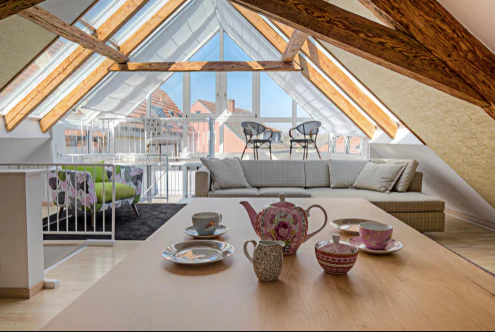
Attic lighting design blends layered ambient, task, and accent strategies to respect sloped ceilings and evolving use. Each zone becomes a light-form, coordinated with wall washers, under-eave luminaires, and focal accents that preserve architecture while deepening perception. Daylight through skylights and roof windows tempered with daylight corridors reduces energy use and glare. Smart controls enable gradual dimming and scene presets, with sensors placed to minimize glare and maximize comfort; the approach invites further refinement.
How to Layer Light in an Attic Space
Layering light in an attic space involves coordinating ambient, task, and accent fixtures to account for sloped ceilings, limited daylight, and evolving usage. This approach treats each area as an attic zone, mapping function to form.
Layered lighting harmonizes wall washers, under-eave luminaires, and focal accents, ensuring flexibility, safety, and perceived depth while preserving architectural character.
Daylight Strategies: Skylights, Roof Windows, and Dawn-Inspired Circulation
Skylights, roof windows, and dawn-inspired circulation strategies leverage natural light to temper artificial schemes, reduce energy use, and enhance spatial perception in attic environments.
Daylight corridors synchronize light with movement, supporting sunlight tracking across planes while preventing glare.
Vented skylights integrate passive cooling and controlled air exchange, maintaining comfort.
The approach respects freedom in design, balancing technical accuracy with refined, aesthetic clarity.
Accent and Ambience: Sconces, Pendants, and Feature Lighting for Beams
Accent and ambience in attic spaces derive from carefully selected sconces, pendants, and feature lighting tailored to beam lines and volumes. The selection emphasizes sconce textures that read as tactile reflections along timber, while pendant heights are calibrated to preserve sightlines and depth. Beams receive grazing highlights, sculpting architectural rhythm without overpowering the space’s airy clarity.
Smart Controls and Practical Tips for Comfort and Glare Reduction
Smart controls offer precise, energy-efficient management of attic lighting, enabling gradual dimming, scene presets, and timed schedules that align with circadian rhythms and usage patterns. This approach reduces glare by coordinating ambient and task layers, while preserving spatial clarity. smart controls enable adaptive load shedding and scene-based comfort. practical tips include sensor placement, mute zones, and routine calibration for consistent performance.
Frequently Asked Questions
How Do I Choose Color Temperature for Attic Lighting?
Color temperature should be chosen by task: cooler for precision tasks and warmer for relaxation, balancing glare and contrast. Lighting placement matters most, ensuring even coverage, minimizing shadows, and enhancing architectural features while preserving flexibility and comfort.
What Are Budget-Friendly Lighting Ideas for Attics?
Budget friendly attic lighting ideas emerge as practical, cost-conscious solutions; nonetheless, efficiency and aesthetics govern choices, delivering flexible illuminance for working spaces and relaxation zones alike, while preserving airflow and freedom in design, without compromising safety or style.
Can Attic Lighting Affect Room Resale Value?
Attic resale value can improve when lighting enhances visibility, ambiance, and perceived space; the lighting impact hinges on color temperature, uniformity, and control. Precisely designed schemes elevate buyer perception, balancing aesthetics with functional flexibility for a freedom-seeking audience.
Are Battery-Operated Lights Suitable for Sloped Ceilings?
Yes, battery lighting can suit sloped ceilings, including vaulted ceilings, when carefully chosen and installed. It supports flexibility, minimizes cords, and enables precise focal accents, though brightness consistency and fixture weight require engineering awareness for safe, aesthetically coherent results.
See also: Crypto Adoption by Global Businesses
How Can I Ensure Safe Wiring in Finished Attics?
To ensure safe wiring in finished attics, one should consult licensed electrician, verify attic code compliance, install properly rated conductors, junction boxes, and inaccessible splices, and perform thorough inspections; safe wiring supports aesthetic flexibility and structural integrity while meeting attic code compliance.
Conclusion
In sum, attic lighting emerges as a crafted orchestration rather than a mere install. Layered ambient, task, and accent elements align with sloped planes, while daylight from skylights tempers glare and preserves depth. Smart controls choreograph brightness like a conductor, and sensor zoning avoids waste. With calibrated pendants and sconces, sightlines stay crisp and rooms feel grounded yet airily refreshed. The result is a precise, aesthetic balance where architecture and illumination breathe in harmonious, daylight-informed rhythm.